
You hear the words, “You have prostate cancer,” and everything after that can feel like a blur. Appointments fill the calendar, decisions come quickly, and you are being asked to choose a path before you have even had time to process what just happened.
For many Black men, that moment can carry additional emotional and medical weight.
This is because prostate cancer does not affect all populations equally.
Why Prostate Cancer Awareness and Treatment for Black Men Matters
Black men are more likely to develop prostate cancer. It often develops at a younger age. It is also more likely to become aggressive.
That is why prostate cancer awareness and treatment for Black men matters so much.
Fear doesn’t have to lead. It is about being informed, prepared, and empowered.
There is also something important you should know. Treatment today is not what it used to be. Medicine is changing in a way that gives you more control over what happens next.
What Precision Medicine Really Means
You might hear the term and think it sounds complicated. It is actually simple.
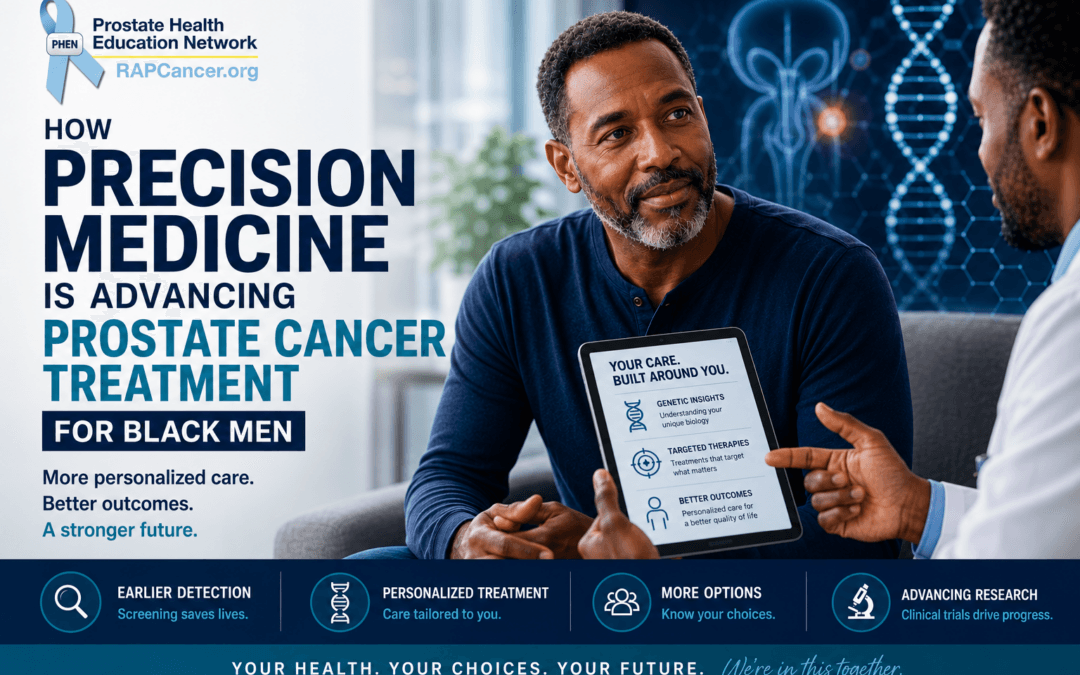
Precision medicine means your treatment is built around you, based on your tumor biology, genetics, and overall health.
Your cancer is not exactly like anyone else’s. The way it grows, the way your body responds, your overall health, and even your genetics all play a role. Doctors can now look deeper at those details and use them to guide decisions.
This is what personalized prostate cancer treatment looks like in practice.
Instead of guessing, your care team can make more informed choices about what is most likely to work for you.
How This Changes Prostate Cancer Treatment Options for Black Men
You may already know some of the standard treatments. Surgery. Radiation. Hormone therapy. Chemotherapy.
Those options still matter. What has changed is how doctors decide which one is right.
With precision medicine, your care team can use tools like genomic testing to understand how aggressive your cancer is. That can help avoid treatments that may be less effective or unnecessary. It can also show when it is important to act quickly and more aggressively.
Testing for inherited or tumor-specific genetic changes (biomarkers) can help guide treatment decisions and determine eligibility for targeted therapies and clinical trials.
There are also targeted therapies, such as treatments designed for cancers with specific genetic changes (for example, PARP inhibitors), that focus on specific parts of the cancer instead of affecting your whole body.
This means your plan is based on more than just a general diagnosis. It is based on your specific situation.
This can lead to better outcomes and fewer unnecessary side effects.
Why Prostate Cancer Screening for Black Men Is So Important
All of this starts with knowing what is going on in your body.
Prostate cancer screening for Black men can catch cancer early, sometimes before symptoms show up. Early detection opens the door to more treatment options and more precise care.
At PHEN, men of African descent and other high-risk individuals are advised to begin PSA screening at age 40, consistent with NCCN® guidelines.
A simple conversation with your doctor can make a real difference.
Understanding Clinical Trials Without Fear
A lot of people hear “clinical trial” and feel unsure. That reaction is completely understandable.
But here is what often gets missed.
Prostate cancer clinical trials are helping shape the future of treatment for men of African descent and other populations. They give patients access to newer therapies that are not widely available yet and are conducted under strict safety and ethical guidelines.
They are also critical because Black men have not always been fully represented in research. That gap matters. It affects how treatments are developed and how well they work across different populations.
Today, many clinical trials are built around more personalized care. Treatments are often matched to specific features of your cancer, including its genetics, to find what may work best for you.
In some cases, a clinical trial is not only a last option. It can be one of the most advanced and appropriate options available at certain stages of care.
What You Can Do Right Now
Whether you are facing a diagnosis or thinking about your health, start here.
- Understand all your prostate cancer treatment options and ask why a certain recommendation is right for you.
- Ask if your plan includes personalized prostate cancer treatment, including genomic or biomarker testing.
- Inquire early about prostate cancer clinical trials for Black men as part of your options.
- Discuss screening, treatment, and clinical trial options with your healthcare provider to make informed decisions.
A More Personal Way Forward
The conversation around prostate cancer is changing.
It is no longer just about choosing a treatment. It is about choosing the right treatment for you.
That shift gives you something important. A voice in your care. A clearer understanding of your options. A chance to make decisions that fit your life while still taking your diagnosis into account.
What This Moment Can Become
This is bigger than a diagnosis.
It is about understanding your body, knowing your options, and choosing a path that fits your life. Precision medicine is changing prostate cancer care into something more personal and more precise.
For Black men, where the risk is higher, that change matters. It means better information, more tailored treatment, and a real chance at earlier, more effective care.
You have options. More than you may realize.
Take the time to understand them. Ask how your care can be personalized. Look into clinical trials. Stay on top of screening.
Because this goes beyond cancer. It is about your time, your health, and the people who need you here.